If you do one thing to train more effectively this year, track your workouts. It sounds obvious, but the simple act of writing down what you lifted turns guesswork into progress you can see — and gives you a target to beat every single session. Here's how to do it properly, and how to make it a habit that actually sticks.
Why tracking works
Progress in the gym comes from doing a little more over time — more weight, more reps, better quality. You can't apply that if you can't remember what you did last week. Tracking gives you three things: a record to beat, evidence that you're improving (which is hugely motivating), and the data to spot when something has stalled and needs changing.
What to log
Keep it simple. For every set, record:
- The exercise — so your history lines up over time.
- The weight — per side or total, as long as you're consistent.
- The reps — or duration, for timed and cardio work.
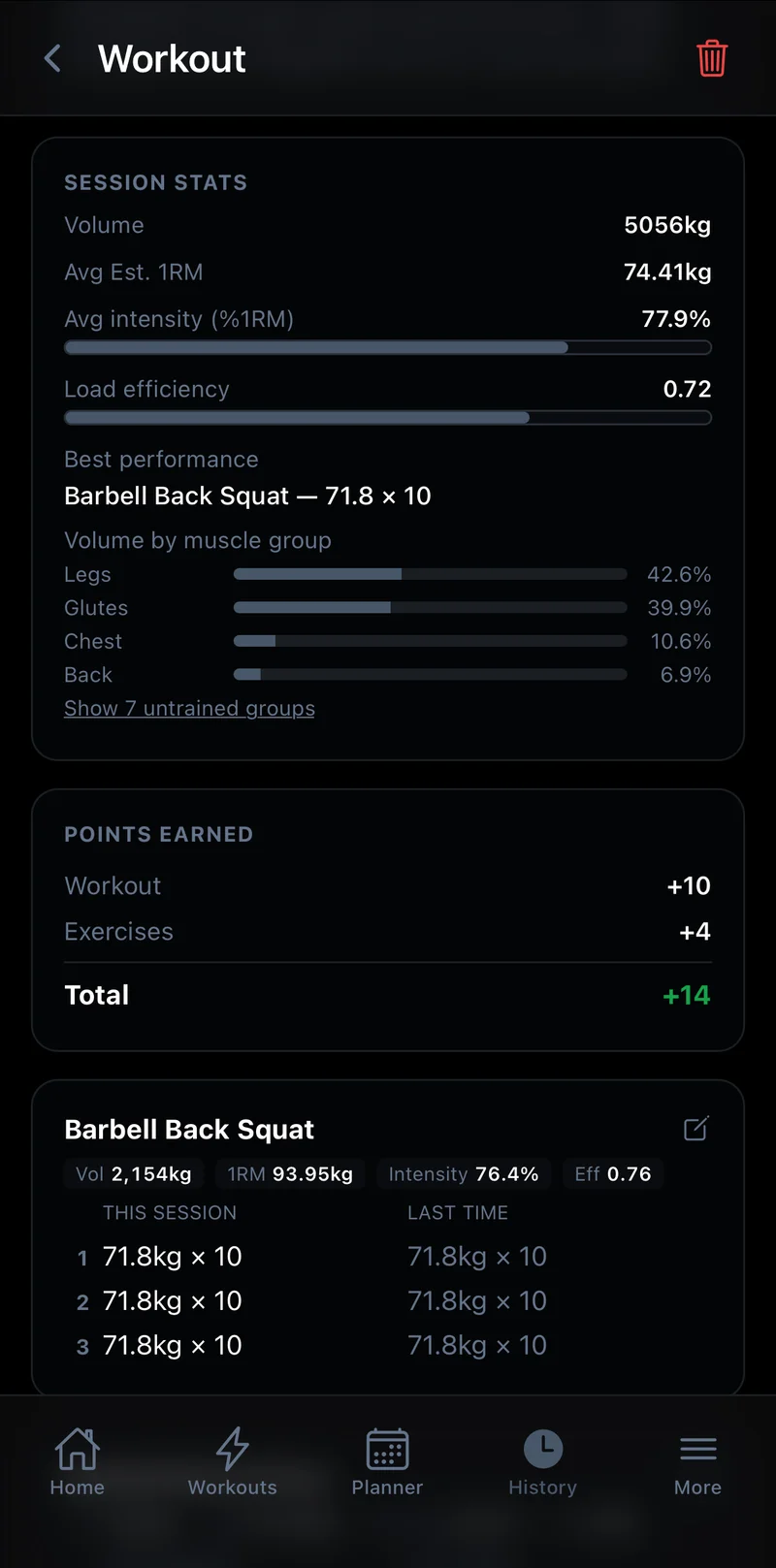
That's the core. Once that's a habit, a few extras pay off: a quick note on how a set felt, your rest between sets, and personal bests. Good apps flag PBs for you — Joti, for example, checks every completed session against your history and marks a personal best the moment you hit one, so you never have to work it out yourself.
How to read your progress
Numbers only help if you look back at them. Two views matter most:
- Last time, mid-set. Seeing what you did last session while you're about to lift gives every set a target. This alone drives progression.
- Trends over weeks. Total volume (sets × reps × weight) and estimated one-rep max show whether you're genuinely moving forward or just spinning your wheels. Joti's extended statistics chart these per workout or per exercise.
Paper, spreadsheet, or app?
All three work, and the best one is the one you'll keep using. Paper is frictionless but hard to analyse. A spreadsheet is powerful but fiddly on a gym floor. A dedicated app wins for most people: it shows your previous performance automatically, handles plate maths, flags PBs, and keeps everything synced so you never lose your history. If you go the app route, our roundup of the best workout apps for 2026 is a good starting point.
Making it stick
Consistency beats perfection. A few things that help:
- Log as you go, not after — recording a set between reps takes seconds; reconstructing a whole session from memory later rarely happens.
- Use previous-performance prompts so each set already has a number to chase.
- Lean on streaks and reminders. Small nudges — points, a daily streak, a rank to climb — turn tracking into a habit rather than a chore. Joti builds these in for exactly this reason.
- Don't over-track. Start with weight and reps. You can always add detail later; a simple habit you keep beats a detailed one you abandon.
Start today
Pick your method, log your very next session — even just weight and reps — and check back in a month. Seeing the line move is what keeps most people going. If you want a tracker that shows last time's numbers, calculates your plates and writes up each session with AI, give Joti a try — it's free to download, and free for your first month with no purchase required.
Frequently asked questions
What should I track in my workouts?
At a minimum, log the exercise, the weight, and the reps (or duration for timed work) for every set. That is enough to see progress and beat your last performance. Over time, add notes on how a set felt and track personal bests — most apps, including Joti, flag PBs for you automatically.
Is it better to track workouts on paper or an app?
Paper works, but an app makes it far easier to see trends, compare against last time mid-set, calculate plate loading and get personal bests without any maths. A tracker like Joti also keeps your history synced across phone and web so you never lose it.
How do I stay consistent with tracking?
Make it frictionless: log sets as you go rather than after, use an app that shows your previous performance so each set has a target, and lean on streaks or reminders. The less effort each entry takes, the more likely you are to keep it up.